

Ten More Commandments

Hello Lovely Readers!
Did you know that the famous Ten Commandments are not the only commands which are repeated in the New Testament?
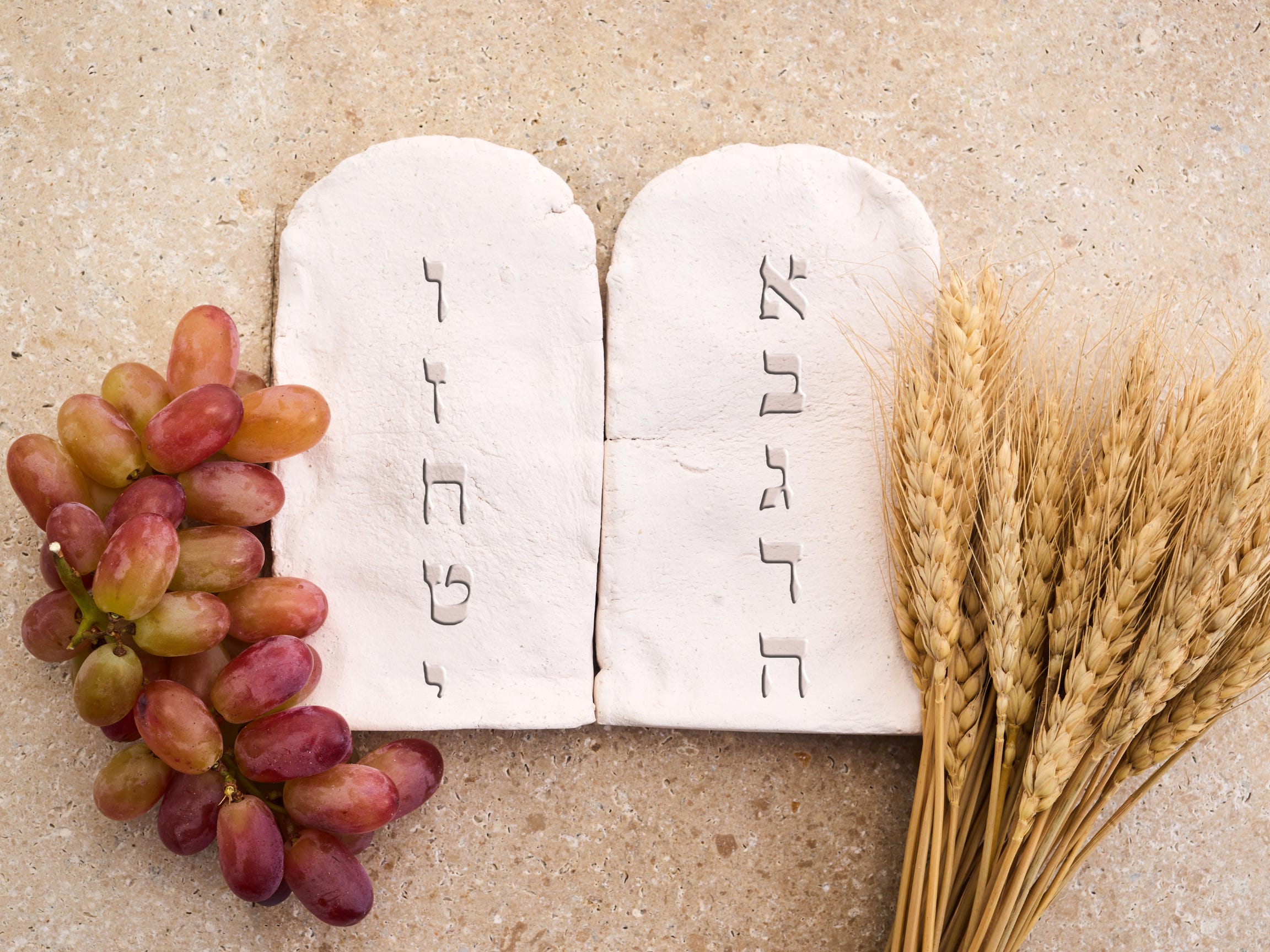
The Ten Commandments
Everyone knows the Ten Commandments:
I am the Lord your God
You shall not make any graven images for yourself nor bow down to them
Do not bring the name of the Lord your God to naught
Honor the Sabbath day, and keep it holy
Respect your father and mother
Do not murder
Do not commit adultery
Do not steal
Do not bear a false witness
Do not covet
To summarize one of the most recapitulated passages in the Bible.
A lot of people think that these are the only commands from the Torah that are repeated in the New Testament.
I decided to put this to the test.
After a bit of skimming through my high(ly)lighted Bible, I found that there are actually several more commands from the Torah that are re-commanded in the New Testament. And Yeshua (Jesus) even gave many of them.
Today, I will share with you ten more commands from the Torah that are taught nearly word for word in the New Testament.
Ten More Commandments
1. Love God and 2. Love People
Let’s jump right in with the two greatest commandments:
28 And one of the scribes coming near, hearing them reasoning together, knowing that he had answered them well, asked him, “Which is the first command of all?” 29 and Yeshua (Jesus) answered him, “The first of all the commands is, ‘Hear, O Yisra’el, Yahweh our Elohim, Yahweh is one. 30 And you shall love Yahweh your Elohim with all your heart, and with all your being, and with all your strength.’ This is the first command.
31 And the second, like it, is this, ‘You shall love your neighbor as yourself.’ There is no other command greater than these.” — Mark 12:28-31
Everyone knows these well. But did you know these commands originated, word for word, in Deuteronomy and Leviticus?
4“Hear, O Yisra’el: Yahweh our Elohim, Yahweh is one! 5 And you shall love Yahweh your Elohim with all your heart, and with all your being, and with all your might.”
— Deuteronomy 6:4-5
18 ‘Do not take vengeance or bear a grudge against the children of your people. And you shall love your neighbor as yourself. I am Yahweh.’ — Leviticus 19:18
(More verses: Matthew 22:35-40; Romans 13:9; Galatians 15:14)
3. Do Not Hate
Closely related to the two greatest commands, is “do not hate”.
22 “But I say to you that whoever is wroth with his brother without a cause shall be liable to judgment. And whoever says to his brother, ‘Raka!’ shall be liable to the Sanhedrin. But whoever says, ‘You fool!’ shall be liable to fire of GeHinnom.” — Matthew 5:22
18 ‘Do not take vengeance or bear a grudge against the children of your people. And you shall love your neighbor as yourself. I am Yahweh.’ — Leviticus 19:18
(More verses: Deuteronomy 19:11-12; 1 John 4:20)
4. Love Your Enemies
43 “You heard that it was said, ‘you shall love your neighbor and hate your enemy.’ 44 But I say to you, love your enemies, bless those cursing you, do good to those hating you, and pray for those insulting you and persecuting you, 45 so that you become sons of your Father in the heavens. Because He makes His sun rise on the wicked and on the good, and sends rain on the righteous and on the unrighteous.” — Matthew 5”43-45
There are many times where Yeshua says “You heard it was said”. And like in the verse above, this is in reference to the pharisaic teachings that twisted the Torah. They said these things but they did not teach them correctly. This is evident in the following verse:
33 ‘And when a stranger sojourns with you in your land, do not oppress him. 34 Let the stranger who dwells among you be to you as the native among you, and you shall love him as yourself. For you were strangers in the land of Egypt. I am Yahweh your Elohim.’
— Leviticus 19:33-34
The Torah did not teach “hate your enemies”. This was a Pharisaic addition and twisting of what Yahweh said concerning strangers, conflict, and idolatry in the land. Yeshua addressed this misconception and proceeded to teach the words that the Pharisees did not: love all people, not just your brothers.
(More verses: Exodus 22:21, 23:9)
5. Care for the Widow and Orphan
As well as loving our neighbor and our enemy, we should also care for the widows and orphans:
27 “Clean and undefiled religion before the Elohim and Father is this: to visit orphans and widows in their affliction, and to keep oneself unstained from the world.” — James 1:27
The Torah has many passages on ways we can care for the widows and orphans. In the Father’s land, those in need are not to be neglected.
““Do not twist the right-ruling of a stranger or the fatherless, nor take the garment of a widow. But you shall remember that you were a slave in Egypt, and that Yahweh your Elohim ransomed you from there. Therefore I am commanding you to do this word. “When you reap your harvest in your field, and have forgotten a sheaf in the field, do not go back to get it. Let it be for the stranger, for the fatherless, and for the widow, so that Yahweh your Elohim might bless you in all the work of your hands. “When you beat your olive trees, do not examine the branch behind you. Let it be for the stranger, for the fatherless, and for the widow. “When you gather the grapes of your vineyard, do not glean behind you. Let it be for the stranger, for the fatherless, and for the widow. “And you shall remember that you were a slave in the land of Egypt. Therefore I am commanding you to do this word.”
—Deuteronomy 24:17-22
(More verses: Exodus 22:22, Deuteronomy 26:12-13)
6. Do Not Swear Falsely
To swear falsely is to say you will do something, or make a promise, and not following through.
33 “Again, you heard that it was said to those of old, ‘You shall not swear falsely, but shall perform your oaths to Yahweh.’ 34 But I say to you, do not swear (vainly) at all, neither by the heaven, because it is Elohim’s throne; nor by the earth, for it is His footstool nor by Jerusalem, for it is the city of the great Sovereign; nor swear by your head because you are not able to make one hair white or black. But let your word ‘Yes’ be ‘Yes’ and your ‘No’ be ‘No’. And what goes beyond these is from the wicked one.” — Matthew 5:33-36
21”When you make a vow to Yahweh your Elohim, do not delay to pay it, for Yahweh your Elohim is certainly requiring it of you, and it shall be sin to you. 22 But when you abstain from vowing, it is not a sin to you. 23 That which has gone from your lips you shall guard and do, for you voluntarily vowed to Yahweh your Elohim what you have promised with your mouth.”
— Deuteronomy 23:21-23
This example of “you heard it was said” is a proof that the Pharisees only taught part of the command. Not that they taught a false word, but that they did not teach the complete command. Yeshua proceeds to repeat Deuteronomy 23:21-23 nearly word for word, filling in the blanks where the Pharisees neglected to impart wisdom.
(More verses: Leviticus 19:12)
7. Do Not Curse Your Father or Mother
While this command is similar to “Honor your father and mother” in Exodus 20:12, it is actually a separate command.
4 “For Elohim has commanded, saying, ‘Respect your father and mother,’ and, ‘He who curses father or mother, let him be put to death.’” — Matthew 15:4
17 “And he who curses his father or his mother shall certainly be put to death.”
— Exodus 21:17
(More verses: Exodus 20:12, Leviticus 20:9)
8. Divorce on the Matter of Adultery
31 “And it has been said, “Whoever puts away his wife, let him give her a certificate of divorce.’ 32 But I say to you that whoever puts away his wife, except for the matter of whoring, makes her commit adultery. And whoever marries a woman who has been put away commits adultery.” — Matthew 5:31-32
Another place where the Pharisees only told half the story. The way they taught this command was that one could divorce for any reason. Yeshua reiterated that there must be just cause for divorce.
“When a man takes a wife and shall marry her, then it shall be, if she finds no favour in his eyes because he has found a matter of uncoveredness in her, and he shall write her a certificate of divorce, and put it in her hand, and send her out of his house, and if she left his house and went and became another man’s wife, and the latter husband shall hate her and write her a certificate of divorce, and put it in her hand, and send her out of his house, or when the latter husband dies who took her to be his wife, then her former husband who sent her away is not allowed to take her back to be his wife after she has been defiled, for that would be an abomination before Yahweh. And do not bring sin on the land which Yahweh your Elohim is giving you as an inheritance.”
— Deuteronomy 24:1-4
***THIS COMMAND DOES NOT PERMIT ABUSE NOR REFUSE SOMEONE ESCAPE FROM ABUSE***
While abuse is not addressed in these two passages, know there are commands which reprimand abusers and this would lead to just punishment. But these commands are found in communal laws. They are not directly joined with marriage laws because they are not specific to a husband/wife relationship, rather they are applicable for all persons.
(Extra verses: Genesis 2:24, Mark 10:6-9, Matthew 19:3-11)
9. LGBTQ+
“Therefore Elohim gave them up to uncleanness in the lust of their hearts, to disrespect their bodies among themselves, who changed the truth of Elohim into the falsehood, and worshipped and served what was created rather than the Creator, who is blessed forever. Amĕn. Because of this Elohim gave them over to degrading passions. For even their women exchanged natural relations for what is against nature, and likewise, the men also, having left natural relations with woman, burned in their lust for one another, men with men committing indecency, and receiving back the reward which was due for their straying. And even as they did not think it worthwhile to possess the knowledge of Elohim, Elohim gave them over to a worthless mind, to do what is improper, having been filled with all unrighteousness, whoring, wickedness, greed, evil; filled with envy, murder, fighting, deceit, evil habits; whisperers, slanderers, haters of Elohim, insolent, proud, boasters, devisers of evils, disobedient to parents, without discernment, covenant breakers, unloving, unforgiving, ruthless; who, though they know the righteousness of Elohim, that those who practice such deserve death, not only do the same but also approve of those who practice them.” — Romans 1:24-32
“‘And do not lie with a male as with a woman, it is an abomination.” — Leviticus 18:22
“‘And a man who lies with a male as he lies with a woman: both of them have done an abomination, they shall certainly be put to death, their blood is upon them.” — Leviticus 20:13
10. Sorcery & Witchcraft
“And they did not repent of their murders, nor of their drug sorceries, nor of their whoring, nor of their thefts.” — Revelation 9:21
“And the works of the flesh are well-known, which are these: adultery, whoring, uncleanness, indecency, idolatry, drug sorcery, hatred, quarrels, jealousies, fits of rage, selfish ambitions, dissensions, factions, envy, murders, drunkenness, wild parties, and the like – of which I forewarn you, even as I also said before, that those who practice such as these shall not inherit the reign of Elohim.” — Galatians 5:19-21
I am using TS2009 here, but in KJV, drug sorcery is translated as witchcraft which are both accurate translations of the Greek word pharmakeia in the text.
“‘Do not eat meat with the blood. Do not practice divination or magic. ‘Do not round the corner of your head, nor destroy the corner of your beard. ‘And do not make any cuttings in your flesh for the dead, nor put tattoo marks on you. I am Yahweh.” — Leviticus 19:26-28
(Extra verses: Exodus 22:18; Acts 19:13-20)
So There We Have It
There are more than just first the ten commands in Exodus 20 that are repeated in the New Testament.
Again and again, Yeshua was addressing mistaught commands and teaching them in their entirety. He was emphasizing the love and truth in the commands that the Pharisees neglected to teach themselves. He was correcting bad teaching.
Message of the Day
All in all, Yeshua upheld the commands of his Father and stayed true to his word:
“Do not think that I came to destroy the Torah or the Prophets. I did not come to destroy but to complete. For truly, I say to you, till the heaven and the earth pass away, one yod or one tittle shall by no means pass from the Torah till all be done. Whoever, then, breaks one of the least of these commands, and teaches men so, shall be called least in the reign of the heavens; but whoever does and teaches them, he shall be called great in the reign of the heavens. For I say to you, that unless your righteousness exceeds that of the scribes and Pharisees, you shall by no means enter into the reign of the heavens.” - Matthew 5:17-20
He came to complete the half teachings of the Pharisees.
Shalom,
— Alexis
I love this article! Such a great idea to highlight 10 other commandment shared between the OT and NT. Thanks, Alexis. 🩷
We should never forget that we are not alone in the boat.